


 No Items in Cart
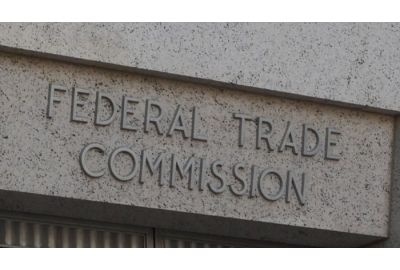
On September 5th, 2025, the Federal Trade Commission (FTC) filed a motion to dismiss its appeals in two pivotal cases involving a nationwide noncompete ban. Specifically, the two cases in question were Ryan, LLC v. FTC, No. 24-10951 (5th Cir.), and Properties of the Villages v. FTC, No. 24-13102 (11th Cir.). In 2024, the agency filed an appeal in those two cases, which blocked the FTC’s then-proposed ban on noncompete rules. At that time, however, the Biden administration was still in office. This September 2025 motion is being filed under the Trump administration. Earlier this year, in January, the FTC issued antitrust guidelines for business activities that affect workers. Markedly, these guidelines were jointly issued with the Department of Justice’s (DOJ’s) Antitrust Division.
Background on the FTC’s Noncompete Ban
In May 2024, the FTC issued a final rule banning noncompete agreements in most aspects of employment. Chiefly, the agency believed that the ban would help promote competition between businesses. As a result of eliminating noncompete agreements, the FTC stated that a worker’s fundamental right to change jobs would now be protected.
The FTC also stated that noncompetes are often exploitative practices. Above all, they impose contractual conditions that prevent workers from taking a new job or starting a new business. These types of agreements can also create other significant harms and costs, such as employees being forced to:
- switch to a lower-paying field,
- relocate,
- leave the workforce altogether, or
- defend against expensive litigation.
Original Projected Outcome of the Noncompete Ban
Overall, the FTC estimated that banning noncompetes would lead to new business formation growing by 2.7% per year. Subsequently, this would result in more than 8,500 new businesses being created each year. The rule is also expected to generate higher earnings for workers, with estimated annual earnings increasing by an additional $524. Similarly, healthcare costs were projected to be lower by up to $194 billion over the next decade. Finally, the noncompete ban was expected to result in an increase of 17,000 to 29,000 more patents each year for the next decade. Such a rise in that number would identify an increase in overall innovation.
Under the new rule, all existing noncompetes for most workers would no longer be enforceable after the rule’s effective date of August 21st, 2024.
Initial Pause of the Noncompete Ban
On August 20th, 2024, one day before the rule’s effective date, the U.S. District Court for the Northern District of Texas (Court) struck down the FTC’s ban. Consequently, this ruling was in response to a lawsuit filed by a Texas employer, the U.S. Chamber of Commerce, and several other business organizations against the FTC.
In summary, the Texas judge gave two main arguments for striking down the final rule banning noncompete agreements in the case known as Ryan v. FTC:
- Firstly, the FTC didn’t have the power to issue the rule. This is because Congress only authorized it to issue procedural rules to address unfair methods of competition, not substantive rules.
- Secondly, according to the Court, the rule alone was “arbitrary and capricious.”
As a result of the Texas district court ruling, the FTC appealed the decision. However, as mentioned earlier, this was under the Biden administration.
Official End of the Noncompete Ban
Subsequently, on March 7th, 2025, the Trump administration's FTC filed motions requesting a 120-day stay of the agency’s appeal of the district court’s decision in Ryan and another decision levied later in Properties of the Villages v. FTC. According to both motions, FTC Chair Andrew Ferguson stated that the agency would reconsider its defense of the proposed noncompete ban. The FTC planned to provide the Court with a status report at the end of the 120-day stay. This action led to the agency’s motion on September 5 to dismiss its appeals in the two cases, allowing noncompetes to remain legal and to be required and kept on file.
Employer Takeaways
In conclusion, according to Seyfarth, although the original noncompete ban is no longer in effect, the FTC will not ignore that subject altogether. Based on comments presented by Chair Ferguson, the agency will initiate focused crackdowns, establish task forces, and scrutinize all noncompete violation cases as needed. Employers are also invited to give public input on how noncompete agreements are used in your industry and what effects, if any, they have on your business in general.


