

 No Items in Cart
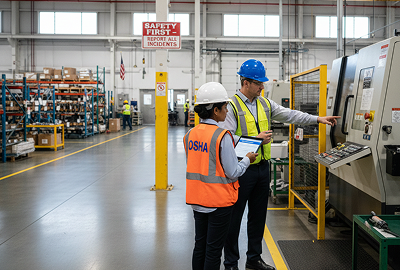
An OSHA inspection is a formal workplace safety review conducted by the Occupational Safety and Health Administration (OSHA), a division of the U.S. Department of Labor. During an OSHA inspection, compliance officers evaluate whether employers comply with the Occupational Safety and Health Act (OSH Act) and other associated federal labor laws. An OSHA inspection is a government‑initiated enforcement activity. These inspections may be unannounced and can lead to citations and penalties if the compliance officer finds violations. Employers should view the inspection process as a chance to correct hazards and demonstrate good faith.
Employers who understand what happens during an OSHA inspection are better prepared to respond calmly and demonstrate good-faith compliance.
What OSHA Inspections are Designed For
OSHA inspections function similarly to an OSHA audit, focusing on protecting employees and helping to reduce the risk of severe hazards that fall under OSHA guidelines. During an OSHA inspection or OSHA compliance audit, compliance officers visually assess working conditions based on complaints made against a facility by employees who feel they have been exposed to unsafe working environments due to unsafe work practices or other unsafe working conditions. When conducting an OSHA inspection procedures, the inspector will visually inspect the physical location of the facility to see if the company is following all applicable OSHA regulations. The inspections are generally unannounced, and this allows the inspector to view the conditions that exist at a time when they were not present. However, if an employer chooses to request a warrant prior to an inspection being conducted, it is within the employer's rights.
Causes of Inspection
Under the OSH Act, OSHA directs its compliance officers to prioritize sites in a strict order:
- Imminent Danger Situations: A problem that could result in either death or serious injury will take the highest level of priority over everything that may exist; therefore, Compliance Officers will solicit employers to immediately fix any Imminent Danger Hazard that is in existence, or else the Compliance Officer will require the removal of all employees exposed to imminent danger.
- Severe Injuries/Illnesses: All employers are required to report all deaths of employees that happen at work within 8 hours and all employees admitted to a hospital because of a work-related issue, employee amputations, and employee losses of a body part within 24 hours; these reports usually create the basis for an inspection.
- Employee Complaints: If an employee believes there is a serious hazard in their workplace, they can submit a "confidential" complaint to OSHA; OSHA will then evaluate the complaint and will either conduct a phone/fax investigation or an on-site inspection, depending on the seriousness of the hazard.
- Referrals: OSHA will accept referrals of any potential hazard from other state or federal agencies, local law enforcement authorities, health departments or by media reports.
- Targeted Inspections: Industries considered high-hazard or facilities considered to be high injury-producing industries have inspections conducted on a scheduled basis. Therefore, any facility or organization that has a greater than average number of recorded injuries or is considered to be a high-hazard facility under national emphasis programs will be more closely monitored by OSHA.
- Follow‑Up Inspections: OSHA will then re-inspect the facility to confirm that the hazards were corrected from the previous inspections.
These priorities are part of OSHA’s formal OSHA inspection procedures, which help ensure enforcement resources are directed toward the most serious risks.
How Employees Can Report Hazards?
If you feel an OSHA inspection is needed due to serious workplace hazards, employees have the legal right to request one without fear of retaliation. Complaints can be filed online (OSHA Online Complaint Form), by phone, or through a local OSHA office. Workers may request anonymity, and OSHA will not reveal their identity. For lower‑priority complaints, OSHA may contact the employer by phone or fax, require a written response within five working days, and close the complaint if corrective actions satisfy the complainant. Employers should take these communications seriously; failure to respond adequately may lead to an on‑site inspection.
What are the OSHA Inspection Process Steps?
The OSHA inspection process consists of several stages similar to an OSHA audit designed to ensure fairness and consistency. Understanding these stages, which occur during an OSHA inspection, is important. An OSHA inspection consist of:
- Preparation
- Before visiting, a Compliance Safety and Health Officer (CSHO) researches the worksite’s history and applicable standards.
- Inspectors gather personal protective equipment and instruments to measure potential hazards.
- Employers should likewise prepare by reviewing their safety programs, hazard assessments, and injury logs.
- Presentation of Credentials
- During an OSHA inspection, the Compliance Safety and Health Officer shows official credentials, including a photo and serial number.
- Employers have the right to request identification and may politely ask to see credentials to confirm authenticity.
- OSHA inspections normally occur without advance notice, but employers can require the inspector to obtain a warrant before entering.
- Requiring a warrant is a legal right, yet exercising it can delay the process and may not be in the employer’s best interest unless unusual circumstances exist.
- Opening Conference
The first stage of an OSHA inspection process is the opening conference, where the Compliance Safety and Health Officer explains the purpose, scope, and OSHA inspection procedures. Employers designate a representative to accompany the inspector, and an authorized employee representative also has the right to participate. Under §1903.8 of the regulations, the CSHO may allow additional employer and employee representatives when their participation aids the inspection, and different representatives may accompany the officer during different phases. Third‑party employee representatives (such as union representatives) may accompany the inspection if the CSHO finds their presence reasonably necessary due to relevant knowledge or communication skills.
During the opening conference, employers should:
- Provide required injury and illness records (Forms 300, 300A, 301) and relevant written safety programs.
- Ask clarifying questions about the scope. Is this a comprehensive inspection or limited to certain hazards?
- Clarify trade secret protocols. Inspectors must keep trade secrets confidential.
- Remain polite and cooperative, but do not volunteer unnecessary information.
- The Walkaround Inspection
After the conference, the CSHO, employer representative, and employee representative tour the work areas. The inspector looks for hazards that could cause injury or illness. They may examine:
- Physical conditions: Machine guarding, fall protection, confined spaces, electrical hazards, PPE use, and housekeeping.
- Chemical hazards: Exposure to airborne contaminants, labeling, safety data sheets, and ventilation.
- Hazard communication and training: Hazard communication program, training records, and signs.
- Safety posters and notices: Ensure that the OSHA Safety Poster is displayed where employees can see it. Failure to post may result in a citation.
- Injury logs and recordkeeping: Review of the OSHA Form 300 log and the annually posted Form 300A summary.
During an OSHA inspection, inspectors may also review written safety policies, hazard communication plans, OSHA safety audits and training documents. They will interview a reasonable number of employees privately and take photographs or instrument readings. During the walkaround, inspectors may point out hazards that can be corrected immediately, but they must still issue citations. Prompt correction shows good faith.
- Employee Interviews and Document Review
CSHOs often conduct private interviews with employees to gauge awareness of hazards and training. They may ask questions about how tasks are performed, what training workers received, and whether safety procedures are followed. Employers should avoid coaching employees’ answers; instruct workers to be honest and cooperative. Inspectors may request written programs, training certificates, inspection logs, and permits. From an employer’s perspective, this stage closely resembles an OSHA audit, as inspectors assess training records, written programs, and proof of compliance. Having organized digital records through a compliance platform like WorkWise Compliance LMS for employee training, or similar, can make this stage smoother and demonstrate proactive compliance.
- Closing Conference and Employer Rights
After the walkaround, the CSHO holds a closing conference with employer and employee representatives to discuss findings. The inspector describes apparent violations, explains the standards allegedly violated, and outlines possible courses of action, including informal conferences or contesting citations. They also discuss consultation services and worker rights. If violations exist, OSHA must issue citations and proposed penalties within six months.
Employers have the right to:
- Receive a written Citation and Notification of Penalty describing violations and proposed penalties.
- Request an informal conference with the OSHA area director within 15 working days to discuss or negotiate citations.
- Contest all or part of the citation, proposed penalties, or abatement dates within 15 working days by sending a written notice. Failure to contest within this period makes the citation a final order of the Occupational Safety and Health Review Commission.
The CSHO’s report, along with employer feedback, goes to the area director, who makes final decisions on citations and penalties.
How Long Does the OSHA Inspection Process Take?
The duration varies. The OSHA inspection process can take up to six months because the agency must issue a citation within six months of the violation. However, most on‑site inspections last a few hours to a few days, depending on the size and complexity of the facility, the number of hazards identified, and whether follow‑up sampling is needed. Phone/fax investigations for lower‑priority complaints may conclude in a matter of days.
Key Factors Inspectors Examine During an OSHA Inspection
Understanding what inspectors look for during an OSHA inspection helps employers focus on high‑impact compliance areas. Inspectors will ask, “Does this workplace have adequate safety programs, training, signage, and records?” Inadequate documentation can turn a minor oversight into a citation.
Required Safety Posters and Employee Notices
OSHA regulations require employers engaged in commerce to display the Job Safety and Health: It’s the Law poster in a conspicuous place so employees know their rights. State‑plan employers must post the equivalent state poster. Employers may also need other federal and state labor law notices. WorkWise Compliance offers attorney‑reviewed labor law poster sets that automatically update when regulations change, ensuring you never miss a required notice.
Employee Training Records and Certifications
OSHA standards often require documented employee training. Training records should include the employee’s name, date of training, topics covered, instructor qualifications, and proof of comprehension. According to compliance experts, most general safety training records must be kept for at least one year, forklift certifications for three years, and exposure/medical surveillance records for the length of employment plus 30 years. Inability to produce records during an inspection may lead OSHA to assume training never occurred, resulting in serious violations and fines.
Written Safety Programs and Prevention Plans
Inspectors will ask to see written safety policies, hazard communication programs, respiratory protection plans, lock‑out/tag‑out procedures, and emergency action plans. Having clear, up‑to‑date written programs demonstrates good faith and helps mitigate penalties. Use digital compliance guides or templates to keep programs consistent across multiple sites.
Injury Logs, Incident Reports, and OSHA 300A Access
Employers subject to OSHA’s recordkeeping rule must maintain a Log of Work‑Related Injuries and Illnesses (Form 300) and a Summary of Work‑Related Injuries and Illnesses (Form 300A). The 300A summary must be posted from February 1 through April 30 each year to inform employees. Inspectors will request the current log and may cite employers for failing to post or accurately record incidents. A digital incident tracking system simplifies reporting and ensures records are complete.
OSHA Citations, Penalties, and Employer Risk
Violations discovered during an OSHA inspection may lead to citations and fines. Citations describe the standard allegedly violated, list proposed penalties, and give a deadline for correction. Understanding violation classifications and OSHA Penalty ranges helps employers gauge risk.
Types of OSHA Violations
| Violation type | Penalty |
|---|---|
| Serious Other-Than-Serious Posting Requirements | $16,550 per violation |
| Willful or Repeated | $165,514 per violation |
| Failure to Abate | Up to $16,550 per day beyond the abatement date |
When a citation is issued, OSHA reduces penalties for small employers or those acting in good faith, but no reduction is given for willful violations. Findings from an inspection may also influence future OSHA compliance audits, especially for employers with repeat violations or high injury rates. Citations and penalties must be posted at or near the place where the violation occurred and remain posted until abated or for three working days (excluding weekends and federal holidays), whichever is longer.
How to Respond to a Citation and Prevent Repeated Issues
- Posting the Citation: Immediately post the citation at or near the violation site and keep it posted for at least three working days or until the hazard is corrected. Failure to post is a separate violation.
- Correct Hazards Promptly: Abate violations by the date specified. For serious violations, provide abatement certification to the OSHA area director within 10 calendar days and post proof of correction.
- Decide Whether to Contest: You have 15 working days from receipt to contest the citation, penalty, or abatement date. If you agree, correct the condition and pay the penalty. If you disagree, request an informal conference or file a Notice of Intent to Contest.
- Understand Failure to Abate vs. Repeated Violations: A failure to abate occurs when a condition remains uncorrected; a repeated violation occurs when a similar hazard recurs after being corrected. Avoid repeated violations by addressing root causes, training employees, and conducting an OSHA Compliance Audit.
- Maintain Good Records: Keeping accurate training, maintenance, and incident records proves compliance and can reduce penalties.
How Employers Can Prepare Before an OSHA Inspector Arrives
Proactive preparation reduces stress and improves outcomes. Here are key steps employers should take before an inspector ever visits.
- Training Employees on Inspection Etiquette and Rights
Frontline workers often determine how smoothly an inspection goes. It is important to train employees to:
- Stop work safely and notify management when a CSHO arrives.
- Direct inspectors to the designated employer representative.
- Answer questions honestly but avoid volunteering unrelated information.
- Understand their right to have a representative present and to speak privately with the inspector.
- Respect that giving false information or retaliation against workers is illegal.
- Conducting a Regular OSHA Audit
Regular internal OSHA audits identify hazards before they occur. Use a digital checklist to review:
- Housekeeping, machine guarding, and PPE.
- Hazard communication, labeling, and chemical storage.
- Safety posters and notices (including the OSHA poster and state‑specific notices).
- Training records and certification expirations.
- Emergency action plans and fire exits.
Document findings and corrective actions. OSHA safety audits not only reduce hazards but also demonstrate good faith, which can reduce penalties if violations are found.
- Keeping Safety Posters Updated and Visible
Ensure the current Job Safety and Health: It’s the Law poster is posted in a conspicuous location where employees can see it. Businesses operating across multiple jurisdictions must ensure they display the correct federal and state labor law posters, as posting requirements vary by location and change over time.
- Tracking Training and Certifications Using an LMS Year‑Round
Managing training manually can lead to missed renewals. A Learning Management System (LMS) centralizes training materials, schedules refresher courses, stores certificates, and alerts managers when certifications are expiring.
- Conducting Mock Inspections
Hosting mock inspections with a safety consultant or internal safety manager can reveal blind spots. Walking through each area as if you were an OSHA inspector allows you to correct hazards and practice your inspection protocol. Consider inviting employees to help identify issues and develop a culture of safety.
What Tools Make OSHA Training Easier?
Adopting the right tools can transform OSHA compliance from a reactive chore into a proactive program.
- Workforce Learning Management System (LMS)
A quality lms for employee training lets employers assign, track, and document training across multiple locations. Benefits include:
- Automated tracking: Assign courses based on job roles and receive alerts when training is due.
- Centralized records: Store completion certificates and test scores in one place for quick retrieval during inspections.
- Consistency: Ensure all employees receive the same standardised instruction, regardless of location.
- Scalability: Train new hires or temporary workers easily.
- Online Training Courses and E‑Learning Modules
Online training allows employees to learn at their own pace and revisit materials as needed. E‑learning modules cover a wide range of topics, from OSHA courses to specialized modules on respiratory protection or bloodborne pathogens. When combined with quizzes and completion tracking, online courses provide defensible evidence of training.
Our workplace compliance training is updated by compliance attorneys and subject‑matter experts. Courses include interactive elements that engage learners and ensure comprehension. Employers can customize content for industry‑specific hazards and deliver training in multiple languages.
- Digital Compliance Guides for Ongoing Reference
Digital compliance guides offer searchable, continuously updated references on safety requirements, recordkeeping rules, hazard controls, and best practices. Keeping a digital guide accessible helps managers answer questions quickly and stay updated on new regulatory developments.
Conclusion
OSHA inspections are not random punishments; they are tools for ensuring that workplaces protect workers from harm. In the United States, employers have legal duties but also clear rights, such as accompanying the inspector, requesting a warrant when appropriate, and contesting citations within 15 working days. By understanding why inspections happen, knowing each stage of the OSHA inspection process, and preparing with robust training, documentation, and hazard controls, employers can reduce fear and confusion.
Good preparation involves more than compliance checklists; it requires a culture of safety. Training employees on their rights and responsibilities, keeping records organized, conducting regular self‑audits, and staying current with evolving regulations are all part of the job.
Ultimately, the goal of OSHA inspection procedures isn’t to catch businesses off guard; it’s to protect people. With the right preparation, employers can view inspections as opportunities to validate their safety efforts, identify areas for improvement, and build a workplace where everyone goes home healthy every day. Employers looking for a centralized way to manage training, documentation, posters, and audit readiness can use solutions like the WorkWise Compliance Plan, which brings together OSHA training, compliance resources, and recordkeeping tools in one platform.
FAQs
How frequently does OSHA perform inspections?
OSHA does not conduct inspections on a set schedule or regular time frame. Instead, OSHA prioritizes inspections using a system of priorities such as imminent dangers, employee complaints, serious injury or death, follow-up inspections, referrals from third parties, and high-hazard industries. Employers with poor safety records or prior violations may also face inspections that resemble an OSHA compliance audit, especially when repeat hazards are identified.


