


 No Items in Cart
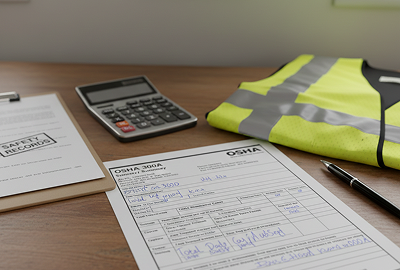
It is seen that many United States employers are cited each year due to the violation of OSHA violations. Those fines are based on the violation of OSHA regulations or the inability to place right records on workplace injuries and diseases. In case your organization is put under the regulations of OSHA and has to record workplace injuries and illnesses, then you ought to be familiar with OSHA 300 log posting requirements.
What Is the OSHA 300 Log?
The OSHA 300 log is a type of federal form that is used to record injuries and illnesses occurring in the workplace. It is a kind of ongoing record that is maintained throughout the year, and helps employers, employees, and OSHA to identify workplace hazards and trends.
This OSHA 300 log posting requirement was established under the Occupational Safety and Health Administration's recordkeeping regulation. The Recording and Reporting of Occupational Injuries and Illnesses regulation requires employers who are covered to maintain accurate records. The records include any serious work-related injury and illness.
The Three Key OSHA Forms
Understanding the OSHA Injury & Illness Recordkeeping starts by knowing the required forms and the difference between the three related forms:
| Forms | Detail |
|---|---|
| Form 300 | Running a log to record all workplace injuries or illnesses |
| Form 300A | An annual summary of the OSHA 300 log must be posted each year. |
| Form 301 | A detailed report for each workplace injury or illness incident. |
While all the above three forms are required for recordkeeping compliance, only the OSHA 300A form, which includes the summary of work-related injuries and illnesses, needs to be posted in the workplace each year.
Who Must Follow OSHA 300 Log Posting Requirements 2026?
It is not required that each and every employer maintain OSHA injury and illness records. The requirements generally depend on the size of the workforce and the type of industry.
1. Covered Employers
Employers having more than 10 employees are required to maintain OSHA 300, 300A, and 301 forms, according to OSHA 300 log posting requirements.
2. Exempt Employers
Some employers are partially exempt from OSHA recordkeeping requirements, including:
- Small Employers: Employers who have 10 or less than 10 employees are generally exempt from OSHA 300 log posting requirements.
- Industries having less Hazard: Employers who are operating in specific low-hazard industries are exempt regardless of size. These industries include retail, finance, insurance, real estate, and certain service sectors.
| Employer Type | Number of Employees | Required to Keep Records? |
|---|---|---|
| General Industry | 11 or more employees | Yes |
| Small Employer | 10 or fewer employees | No (unless directed by OSHA) |
| Low-Hazard Industry | Any size | No (unless directed by OSHA) |
| High-Hazard Industry | 11 or more employees | Yes |
Also, even if you are exempt from OSHA 300 log posting requirements, OSHA may require you to keep records if you receive a written notification. Additionally, all employers must report certain serious incidents to OSHA, such as work-related fatalities, hospitalizations, amputations, or loss of an eye, regardless of exemption status, as outlined in OSHA's reporting requirements.
What Injuries and Illnesses Need to Be Recorded?
Employers need to record the injuries or illnesses that has occur in the workplace. Some examples of workplace injuries and illnesses are listed below:
| Injuries and Illnesses | Description |
|---|---|
| Death |
|
| Days away from work |
|
| Restricted work or job transfer |
|
| Medical treatment beyond first aid |
|
| Loss of consciousness |
|
| Significant injury or illness diagnosed by a physician or licensed healthcare professional |
|
OSHA 300 Log Posting Requirements for Remote Employers
Many establishments must electronically submit injury and illness data through OSHA’s Injury Tracking Application (ITA). Submission requirements depend on establishment size and industry:
| Establishment size and industry | Data to submit | Rule |
|---|---|---|
| 250 or more employees and not in an exempt low‑hazard industry | Form 300A data electronically | These establishments must keep injury records and provide the annual summary to OSHA. |
| 20 to 249 employees (high hazard industries) | Form 300A | Applies to industries with high injury rates such as construction, manufacturing, transportation, warehousing, waste management, and health care. |
| 100 or more employees (high hazard industries) | Forms 300, 300A, and 301 | New rule effective January 1, 2024. Employee names and certain personal details are not submitted. |
Penalties for Non‑Compliance
OSHA penalties increase annually. For citations issued after January 15, 2025, the maximum fines were:
| Violation | Maximum penalty |
|---|---|
| Failure to post the 300A summary | $16,550 per violation |
| Failure to keep accurate records | $16,550 per violation |
| Willful or repeated violations | $165,514 per violation |
Common Mistakes and Tips for Compliance
Employers frequently stumble over recordkeeping. Avoid these missteps:
- Posting the wrong form: It is required to post only the latest year summary. Posting the entire log is unnecessary and risks privacy violations.
- Missing the posting window: The 300A must be posted from February 1 to April 30.
- Hiding the summary: Choose a high‑visibility location. The summary should not be tucked away in management offices.
- Ignoring electronic submission: Check whether you must submit data to the ITA. Many employers mistakenly assume posting alone is sufficient.
- Failing to record incidents promptly: Record each injury or illness within seven days and update the log if circumstances change. Waiting until year‑end invites errors.
- Leaving the summary unsigned: A company executive must certify the accuracy of the 300A summary.
Practical Steps for OSHA 300 Log Compliance
Staying compliant with OSHA 300 log posting requirements requires planning, training, and throughout consistency. Here's how to build a reliable compliance process:Employers frequently stumble over recordkeeping. Avoid these missteps:
1. Track Deadlines with a Compliance Calendar
Set up automated reminders for:
- Recording injuries within seven calendar days
- Completing and certifying the OSHA 300A Summary by February 1
- Posting the summary from February 1 through April 30
- Submitting electronic data by March 2 (if required)Employment contracts and agreements
2. Train Your Team
HR staff, safety managers, and supervisors need to understand OSHA recordkeeping rules. Regular workplace compliance training ensures everyone knows how to identify recordable incidents, complete forms accurately, and meet deadlines
3. Post Required Notices Correctly
Ensure labor law posters and OSHA safety posters are placed in every location where employees report to work. For multi-location employers, multi-location compliance management tools can help track posting requirements across all sites.
4. Use Centralized Compliance Tools
A centralized system can automate reminders, store records securely, and ensure nothing falls through the cracks. WorkWise's lms for compliance training helps organizations manage OSHA training, track certifications, and maintain documentation in one platform.
5. Conduct Internal Audits
Review your OSHA 300 Log, 300A Summary, and 301 forms regularly to ensure accuracy. Identify trends, assess whether incidents were properly classified, and verify that all required information is complete.
How WorkWise Supports OSHA Log Compliance
WorkWise helps employers stay compliant with OSHA recordkeeping and posting requirements through comprehensive tools and resources designed for busy HR and safety teams.
- Annual Compliance Membership: WorkWise Compliance Membership includes automated alerts for posting deadlines, access to updated labor law posters, and expert guidance on federal and state compliance requirements.
- OSHA Training Modules: WorkWise offers several online training modules, including OSHA general industry safety training, injury and illness recordkeeping, hazard communication, and workplace safety. Training is available on-demand and can be assigned to HR staff, safety managers, and supervisors.
- Attorney-Reviewed Posters: WorkWise provides attorney-reviewed posters that meet OSHA and Department of Labor posting requirements. Posters are updated annually and ship with compliance guides.
Conclusion
The poster and recordkeeping regulations, along with OSHA, are aimed at enhancing safety at the workplace by making it transparent. Those employers who have 11 employees or above in non-exempt sectors should maintain records of Form 300; however, those employing 10 and less or sectors that have low risks may be excused. Now, some of the facilities that have 100 or more employees in selected high-hazard industries must post comprehensive data on the log and incident reports. Employers ensure that their workers are safeguarded by providing the correct records and complying with deadlines by being acquainted with the rules to prevent expensive citations and ensure labor law compliance.
FAQs
What is the OSHA 300A posting requirement?
The OSHA 300A posting requirement mainly requires the covered employers to post the OSHA Form 300A Summary of work-related injuries and illnesses every year. It should be noted that the summary must be displayed in a visible location so that employers can see it easily.


