

 No Items in Cart
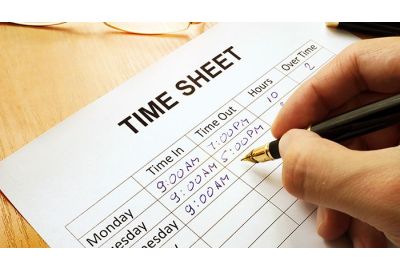
On January 5th, 2026, the U.S. Department of Labor (DOL) released multiple opinion letters discussing critical wage & hour topics. Specifically, one of the four documents informed readers on how to address whether specific bonuses can be excluded from regular pay calculations. Additionally, the letters covered employee classification, overtime exemptions, and collective bargaining agreements. Although the opinion letters focused on specific sections of the national workforce (for example, the bonuses and regular pay opinion letter focuses on waste management employees), the overall concepts in the resources fall under the Fair Labor Standards Act (FLSA). The FLSA applies to most employers in most workplaces. Earlier, in October 2025, the DOL released three other wage & hour-focused opinion letters focused on tip pooling, overtime calculations, and joint employer practices.
The Fair Labor Standards Act (FLSA)
As previously noted, bonus payouts, employee classification, overtime exemptions, and collective bargaining agreements are dictated by the FLSA. As the nation’s primary wage & hour law and one of the major employment laws employers must follow, the FLSA also establishes minimum wage, overtime protections, and tip regulations for non-exempt part-time and full-time employees.
Overview of the Bonus and Overtime Pay Opinion Letter
Generally, section 7(e) of the FLSA informs employers on how to calculate an employee’s overtime premium. Specifically, an opinion letter (FLSA2026-2) was drafted to address whether certain “Safety, Job Duties, and Performance” bonuses may be excluded from an employee’s regular rate of pay when calculating that premium. Accordingly, the DOL says that they cannot, at least not under the circumstances explained in the letter.
Markedly, the opinion letter details the circumstances surrounding the initial employer question. In general, a pay plan for waste management drivers includes a base hourly rate plus incentive bonuses tied to safety, job performance, and completion of duties. These bonuses are formula-driven and could add up to $9.50 per hour when specific criteria are met. Once those criteria were satisfied, the bonus amount was quantifiable under the plan and automatically earned by the employee. The employer wanted to know if they could exclude that bonus calculation when determining the pay rate for individuals who may be paid overtime at a later date.
In the letter, the DOL states that the FLSA only allows excluding bonus calculations if the bonuses are truly “discretionary.” To the agency, “discretionary” bonuses are those determined solely by the employer at or near the end of the measurement period and not promised in advance. Since the employer previously set the terms and formula for earning the bonus, they created a predetermined plan that employees could reasonably expect. As a result, since the bonus was promised in advance and triggered by conditions set by the employer, it must be included in the regular rate of pay for overtime purposes.
Examining the Employee Classification Opinion Letter
Secondly, the DOL issued Opinion Letter FLSA2026‑1, addressing whether an employee could be classified as non-exempt even when they satisfy the educational and job duties requirements of the FLSA’s learned professional exemption.
According to Littler, the opinion letter was a response to a request from a Licensed Clinical Social Worker (LCSW) employed by a healthcare organization. The employee performed core and sometimes supervisory job duties and had been classified as exempt since obtaining her professional license. However, after an internal restructuring eliminated her supervisory responsibilities, she was reclassified as non-exempt. The employee wanted to know if the position continued to meet the criteria for the FLSA’s learned professional exemption. She also wished to know if her employer could still pay her hourly and classify her as non‑exempt.
Overall, the federal agency could not answer whether the latest position met the learned professional exemption. Even though the DOL believed the worker’s education likely met the exemption, no compensation information was provided. Consequently, the agency couldn’t determine whether the salary threshold was satisfied. The DOL did, however, conclude that even if the employee satisfied all criteria for the learned professional exemption, the employer could lawfully classify them as non-exempt and pay them on an hourly basis. Altogether, the FLSA prohibits misclassifying a non-exempt employee as exempt, but it does not prohibit employers from treating otherwise exempt employees as non-exempt.
Overview of the Commissioned Employee Overtime Exemption Opinion Letter
Thirdly, the DOL issued Opinion Letter FLSA2026-4. This opinion letter clarifies how employers should apply the FLSA Section 7(i) overtime exemption for commissioned-paid employees. Specifically, it addresses two questions:
- Must the federal minimum wage or a higher state minimum wage be used when determining whether an employee satisfies Section 7(i)’s minimum pay requirement?
- To what extent must employee tips be counted when determining whether commissions primarily pay an employee for purposes of Section 7(i)’s requirements?
The DOL confirmed that under Section 7(i), the federal minimum wage controls the Minimum Pay Standard. As a result, an employer satisfies Section 7(i)’s Minimum Pay Standard as long as the employee’s regular rate exceeds one and one-half times the federal minimum wage. However, employers must still comply with all applicable state minimum wage requirements.
Regarding whether tips constitute commissions, the DOL stated that tips are not “commissions” under the FLSA. In fact, tips are generally not considered compensation paid by or on behalf of the employer for employment. In general, tips are considered discretionary payments made by customers. It is important to note that tips may constitute “compensation” when an employer relies on a portion of an employee’s tips to satisfy its wage & hour obligations.
Taking a Look at the Collective Bargaining Agreement Opinion Letter
Finally, according to Littler, the DOL released Opinion Letter FLSA2026-3. This letter addresses whether an employer and union could enter into a collective bargaining agreement (CBA) that mandates a 15-minute “roll call” before each shift. That time, however, would be excluded when calculating FLSA overtime premiums.
Specifically, the employees working under the CBA have fixed eight-hour shifts on a “four days on and two days off” schedule. This means they are working 32 hours over every six days. The employer and union were considering adding a mandatory 15-minute roll call before each shift to bring employees closer to 2,080 hours per year. The employer asked the DOL three questions. Those questions are below with the DOL’s answers.
- Would the mandatory 15-minute roll call period be “hours worked”? Yes, the compulsory roll call time must be counted as “hours worked.
- Can the roll call period supplement pay periods that would otherwise fall below 80 hours on an ongoing basis? Since an employer must compensate all employees for all hours worked, and because the 15-minute roll call time constitutes compensable hours worked, it must be counted as part of each employee's workweek, regardless of the number of hours each employee works that week.
- Could the roll call period be excluded from overtime calculations since it would bring employees closer to 2,080 annual hours? The employer may be able to avoid paying overtime for this additional time if the CBA is structured to qualify for one of two partial overtime exemptions available to unionized employers.
Employer Takeaways
In conclusion, as mentioned previously, although the examples used in the opinion letter involve waste management employees, healthcare workers, commissioned employees, and union workers, the FLSA’s laws and regulations apply to most businesses. This publication serves as a timely reminder to all employers to ensure they adhere to the FLSA's wage & hour rules. If you have any questions, please consult your local labor office or seek the advice of your legal counsel.


