

 No Items in Cart
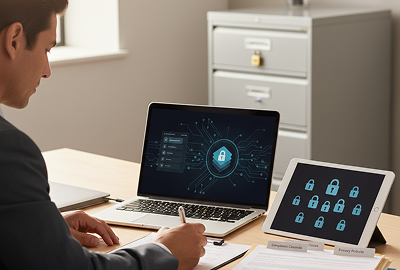
Employers in the United States maintain huge amounts of personal information about their workers – not just names and addresses, but Social Security numbers, healthcare data, salary details, performance records, and even biometric identifiers. This article illustrates the legal landscape around employee data protection, explains what information qualifies as sensitive information, and outlines best practice steps for human resources (HR) departments and compliance teams striving for stronger employee data compliance.
What Counts as Sensitive Employee Data?
HR departments collect more than just contact details. The BD Emerson HR Privacy Guide notes that employers are responsible for protecting any data that can directly or indirectly identify an employee. Examples include:
- Basic identifiers: Full names, home addresses, phone numbers, and email addresses.
- Government identifiers and demographics: Dates of birth and Social Security numbers, which are highly sensitive.
- Financial information: Bank account details, payroll data, benefits elections, and tax identification numbers, which must be secured.
- HR and performance records: Résumés, interview notes, evaluations, and disciplinary records should be kept confidential.
- Background checks and other legal data: Criminal checks, credit reports, and immigration documents are protected under the Fair Credit Reporting Act (FCRA) and immigration laws.
Monitoring & Tracking Tools: Legal Disclosure Requirements
The shift to hybrid and remote work has accelerated employer use of monitoring software. Since 2022, New York, Connecticut, and Delaware have enacted laws requiring employers to provide notice if they electronically monitor employee communications. Employees must acknowledge the notice in writing or electronically, and violations carry civil penalties up to $3,000 per offense.
These employee monitoring laws vary significantly by jurisdiction. Employers should check for any additional state privacy laws that may affect them. Many other states have wiretap laws that complicate phone or internet monitoring. Federally, the Electronic Communications Privacy Act (ECPA) prohibits intercepting employee communications unless an exemption applies, so written policies and notices are crucial.
State‑Level Privacy Law Differences
The International Association of Privacy Professionals (IAPP) notes that there is no singular law of workplace privacy; instead, protections arise from various statutes such as the Health Insurance Portability and Accountability Act (HIPAA), the Americans with Disabilities Act (ADA), the Genetic Information Nondiscrimination Act (GINA), and state data breach notification laws.
- California
The California Privacy Rights Act (CPRA) removed the previous exemption for employee data, requiring covered employers to provide privacy notices to applicants, employees, emergency contacts, and independent contractors. CPRA coverage extends to employers that either have over $25 million in annual revenue, handle personal information of 100,000 or more California residents, or derive at least 50% of revenue from selling or sharing personal information. Compliance with the CPRA is now a foundational aspect of workplace privacy rules across the U.S.
- Colorado and Illinois
The Colorado Privacy Act defines a consumer as a resident acting in an individual or household context and expressly excludes job applicants and employees. Colorado recently amended its law with the Privacy of Biometric Identifiers & Data Amendment, which restricts employers from collecting biometric identifiers only for limited security or safety reasons and prohibits using biometric data to track employees’ locations or time spent using hardware. Colorado employers must obtain consent before collecting biometric identifiers.
Illinois’s Biometric Information Privacy Act (BIPA) requires employers collecting biometric data (e.g., fingerprints or facial scans) to provide notice, obtain consent, and follow data minimization practices. It also grants employees a private right of action.
- Other States
Virginia, Utah, Colorado (consumer context), Connecticut, Delaware, New Jersey, Indiana, Iowa, Montana, Oregon, Tennessee, and Texas have enacted consumer privacy laws that take effect through 2026.
New York’s Stop Hacks and Improve Electronic Data Security (SHIELD) Act requires businesses that own or license private information of state residents (including employees) to implement reasonable safeguards and notify individuals of breaches.
Data Storage + Access Rules for HR
Protecting employee data isn’t just about compliance; it’s about limiting risk. The Federal Trade Commission’s (FTC’s) guide for businesses outlines five practical steps for safeguarding personal information:
- Take Stock: Inventory computers, laptops, mobile devices, and storage media to determine where sensitive data is stored and who has access.
- Scale Down: Collect only the data you need and keep it only as long as necessary. Avoid using Social Security numbers as identifiers and purge outdated files.
- Lock It: Secure physical files in locked cabinets and control access to offices and storage rooms. For electronic data, use encryption, strong authentication, and role‑based access controls.
- Pitch It: Properly dispose of any information that you no longer need.
- Plan Ahead: Create a written incident response plan that outlines how to handle data breaches, including notifying employees as required by state laws.
Employee Data Protection Best Practices
To minimize liability and foster employee trust, employers should go beyond legal minimums:
- Draft clear privacy and monitoring policies.
- Use secure technology and limit data sprawl.
- Provide regular training on recognizing phishing attempts, safeguarding passwords, and following privacy policies.
- Many states require businesses sharing personal data with service providers to obtain written assurances that the provider will protect the data. Conduct your due diligence and include confidentiality and security clauses in contracts.
- Employers should ensure that remote workers understand acceptable use policies and that any monitoring software complies with federal and state requirements.
Conclusion
U.S. employers face a complex landscape when it comes to protecting employee data. Failure to implement reasonable safeguards can lead to discrimination claims, breach notification penalties, or even negligence lawsuits when employee information is compromised. By inventorying the data they hold, minimizing collection, locking down sensitive records, disposing of unneeded information, and preparing for breaches, employers can reduce risk and comply with the evolving legal framework. Protect your workforce and get the Workplace Privacy Laws Program for Employers and Managers.


