

 No Items in Cart
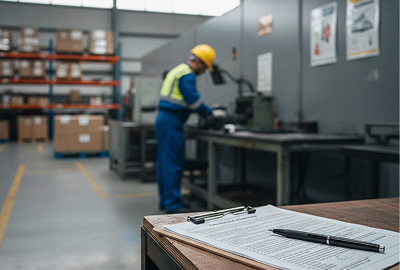
Each year about a lot of U.S. employers face costly OSHA violation fines due to a lack of workplace safety. It is important to understand what OSHA is, how it protects your workers and your business from any workplace hazards, and what the consequences of OSHA violations and penalties may be.
What Is OSHA, and Who Should Follow?
The Occupational Safety and Health Administration (OSHA) is the federal agency that sets rules and regulations for workplace safety standards across the United States that must be followed by employers. It is also an important part of labor law compliance. It was created under the Occupational Safety and Health Act of 1970 to ensure safe and healthful working conditions for employees.
Almost all private sector employers and their workers in all U.S. states fall under OSHA jurisdiction. This includes:
- Manufacturing Facilities
- Construction Sites
- Healthcare Providers
- Retail Establishments, and Other Workplaces
There are a few exceptions also, like self-employed individuals and immediate family members of farm employers.
OSHA also runs state plan programs, which are generally handled by individual states or U.S. territories. Right now, there are 22 state plans that cover most of the private and public sectors.
What are the Fines for OSHA violations?
OSHA classifies violations into distinct categories, each carrying different penalty levels. As of January 2026, these OSHA fines and penalties have been adjusted for inflation following federal regulations.
| Violation Type | OSHA Fines for Violations |
|---|---|
| Willful violation | Any employer who willfully violates the OSHA requirement is required to pay the penalty, which should not be less than $11,823 and not more than $165,514. |
| Repeated violation | The penalty for each repeated violation under the section is about $165,514. |
| Serious violation | For a serious violation, the penalty may be upto $1,221 to $16,550 per violation |
| Other-than-serious violation | Such a violation, which is determined as not to be of a serious nature, may be assessed as a civil penalty of up to $16,550. |
| Failure to correct the violation | An employer who fails to correct a violation may have to face a civil penalty of $16,550 per day after the abatement date |
| Posting requirement violation | Any employer who violates any of the posting requirements has to face a civil penalty of $16,550 per violation. Therefore, it is important to post updated labor law posters. |
Gravity Based Penalty Amounts for Non-Serious Violations
When OSHA inspects a workplace and identifies that there is an other-than-serious (non-serious) violation, the employer may not be fined the first time. Instead, OSHA issues a citation and allows the employer to correct the issue fast. However, if the same violation happens again, OSHA treats it as a repeated violation and applies Gravity Based Penalty (GBP) amounts:
| Violation Repetition | Gravity Based Penalty (GBP) |
|---|---|
| 1st repeat | $472 |
| 2nd repeat | $1,182 |
| 3rd repeat | $2,364 |
What is Gravity Based Penalty?
The OSHA violation fines are determined bya system which is known as the Gravity Based Penalty (GBP). This system calculates the amount of penalties on how serious a hazard is and how likely it is to cause harm. In simple terms, GBP is the starting point OSHA uses to calculate fines before any increases or reductions are applied. OSHA evaluates each violation using two key factors:
- Severity: It generally tells how serious the potential injury or illness could be if an accident occurs. It is calculated as high, medium, and low.
- Probability: It refers to how likely it is that the injury or illness will occur, which can be greater or lesser.
By using these two factors, the Gravity Based Penalty is calculated by OSHA for any violation. There are three types of Gravity level.
| Gravity Level | Gravity Based Penalty (GBP) |
|---|---|
| High Gravity | $16,550 |
| Moderate Gravity | Ranges from $9,457 to $14,187 |
| Low Gravity | $7,093 |
Gravity Based Penalty Amounts for Serious Violations
| Severity | Probability | GBP Amount | Gravity Level |
|---|---|---|---|
| High | Greater | $16,550 | High |
| Medium | Greater | $14,187 | Moderate |
| Low | Greater | $11,823 | Moderate |
| High | Lesser | $11,823 | Moderate |
| Medium | Lesser | $9,457 | Moderate |
| Low | Lesser | $7,093 | Low |
What are the common OSHA Violations?
OSHA publishes its Top 10 most common OSHA violations and fines based on inspection data, which includes:
- Fall Protection in Construction: As the construction workers mostly work at heights such as roofs, scaffolds, or open edges, OSHA requires workers to be protected by using proper safety measures such as guardrails, safety nets, or personal fall arrest systems to avoid any serious injury or death.
- Hazard Communication: The Hazard Communication Standard (29 CFR 1910.1200) requires employers to inform their workers about the chemicals they are working with and the dangers those chemicals can cause. Violations occur when these requirements are ignored, such as:
- Missing or unclear chemical labels
- No Safety Data Sheets
- Workers are not trained on chemical hazards
- Respiratory Protection: When workers are exposed to harmful dusts, fumes, gases, or vapors, employers must provide proper respirators and ensure they are used correctly. Common violations include:
- No respirator fit testing
- Using the wrong type of respirator
- Lack of training or maintenance
- Improper Ladder Use: Improper use of a ladder in construction work, having a poor maintenance, and inadequate training may lead to OSHA violations and fines.
- Scaffolding: It is important that scaffolds are properly designed, assembled, and maintained to support workers' safety. Common violations that workers often make are:
- Missing guardrails
- Incomplete or unstable platforms
- Improper assembly
- Control of Hazardous Energy: Machines must be completely shut off and isolated from energy sources before maintenance or repair work begins. OSHA violation fines occur when :
- Equipment is not locked or tagged
- Workers are not trained on procedures
- Energy sources are not fully controlled
- Powered Industrial Trucks: Forklifts and similar equipment must be operated safely by trained workers, and it is important to make sure that operators are properly trained, do not engage in unsafe driving practices, and have good equipment maintenance.
- Fall Protection Training: Only providing safety equipment is not enough; construction workers must be trained on how to use it correctly. They should be provided with fall protection training, they should be aware of fall hazards, and know how to use safety equipment.
- Eye and Face Protection: It is very important for employers that they must identify hazards that can lead to injuries to workers’ eyes or face and to provide proper protection. Employers should provide safety glasses or face shields to the workers and do proper hazard assessments.
- Machine Guarding: Machines should contain guards that can prevent workers from coming into contact with moving parts. There should not be any exposed gears, belts, or blades.
Understanding these common violations and working on preventing such violations by adding an OSHA safety poster will eventually help an employer to avoid heavy OSHA violation fines and also keep their workplace safe and away from any hazards.
Other Consequences Beyond Direct OSHA Violation Fines
Apart from civil OSHA fines and penalties, there are other Consequences also that can affect an organization for many years and cause non-compliance.
Employers who do not comply with OSHA workplace safety regulations may face significant financial, legal, operational, and reputational consequences.
1. Workers’ Compensation and Insurance Costs
It is often seen that even when the injuries are unintentional, they may lead to workers’ compensation claims.
- Serious injuries can lead to high medical and wage replacement costs
- Insurance premiums may increase for several years following a claim
- Each injury can raise the company’s Experience Modification Rate (EMR)
An increased EMR often results in higher insurance costs, indicating how safe the company is compared to others, which leads to reduced competitiveness when bidding for projects.
In case there are some catastrophic injuries, workers’ compensation payouts may reach higher, which is far greater than most OSHA fines and penalties for violations.
2. Legal Liability and Lawsuits
OSHA citations do not prevent injured workers or their families from filing civil lawsuits.
- OSHA violations are commonly used as evidence of negligence
- Personal injury lawsuits may result in large settlements or court judgments
- Legal expenses often exceed the cost of OSHA fines and penalties
These costs may include attorney fees, settlement payments, court judgments, and long-term financial obligations.
3. Operational Disruptions and Business Losses
When OSHA identifies that there is some imminent danger in the workplace, it has the authority to halt work until the hazards are corrected, which can result in:
- Delays in the project
- Missing deadlines
- Loss of contracts
- Increased labor and overtime costs
Additional expenses may also occur due to equipment repair or replacement and temporary shutdowns of operations.
4. Recruitment and Employee Retention Challenges
Before accepting job offers, workers increasingly review employer safety records.
- OSHA inspection histories and violations are public information
- Poor safety records make it harder to attract skilled employees
- Unsafe workplaces often experience higher employee turnover
High turnover increases hiring and training costs while reducing overall productivity and workforce stability.
5. Reputational Damage and Loss of Business Opportunities
OSHA maintains databases that are accessible, which allow anyone to view inspection histories and violation details.
- Serious violations may attract negative media attention
- Fatal incidents can damage public trust and the company's reputation
- Clients and general contractors may refuse to work with companies that have poor safety records
Many organizations require proof of strong safety performance before awarding contracts or allowing participation in bids. For employers who are operating across multiple states, managing OSHA requirements without a centralized multi-location compliance management often leads to missed deadlines, inconsistent safety practices, and higher enforcement risk.
What Steps Should One Follow to Prevent OSHA Violations and Fines
To prevent OSHA violation fines, one should follow a systematic approach to protect their company from any safety hazards and stay compliant.
1. By Conducting Regular Hazard Assessments
It is important to identify any safety measures your company is lacking before an OSHA inspection. Involve frontline workers who understand daily operations. Document assessments and corrective actions taken. OSHA also provides free consultation services through state programs that don't result in OSHA violations and fines.
2. Implementing Proper Safety Programs
Develop written safety programs tailored to your specific industry and hazards. Essential elements include:
- Clearly described safety policies and procedures
- Designated safety personnel with authority
- Regular meeting of the safety committee
- Incident investigation protocols
- Continuous improvement processes
Modern safety programs also face digital risks; proper cybersecurity training for employees is an important part of overall compliance, especially as OSHA increasingly considers electronic recordkeeping and system access controls.
3. By Providing Training Before Tasks
Train workers before they begin tasks involving potential hazards. Document all training with dates, topics covered, and attendee signatures. It is also important to train workers again when introducing new equipment, changing procedures, or after incidents occur. Apart from physical training, it is important to include legally required programs such as sexual harassment prevention training, which helps employers to avoid legal exposure and demonstrate good-faith compliance.
4. Maintaining Accurate Records
Keep OSHA-required records for the specified retention periods:
- OSHA 300 Log of Work-Related Injuries and Illnesses (five years)
- OSHA 300A Annual Summary (five years, posted annually February 1–April 30)
- OSHA 301 Injury and Illness Incident Report (five years)
- Employee exposure and medical records (30 years for many substances)
Using an LMS for compliance training helps employers store training records, track completion dates, and quickly produce documentation during OSHA inspections.
5. Establishing Corrective Action Systems
When hazards are identified, whether through inspections or employee reports, it is important to implement timely corrections. Track corrective actions through completion. Document protective measures when permanent fixes require time.
6. By Encouraging Employee Participation
Workers often recognize hazards before managers do. Create anonymous reporting systems and ensure no retaliation for safety concerns. OSHA protects whistleblowers who report unsafe conditions.
7. Staying Current on Standards
OSHA regularly updates standards and issues new guidance. Subscribe to OSHA QuickTakes, the agency's free email newsletter, to receive updates on new rules, enforcement initiatives, and compliance assistance resources.
8. Considering Voluntary Protection Programs
OSHA's Voluntary Protection Programs (VPP) recognize employers with exemplary safety programs. VPP sites experience 52% fewer lost workday injuries than average and undergo comprehensive OSHA inspections only every three to five years instead of randomly.
How OSHA Inspections Work
OSHA (Occupational Safety and Health Administration) conducts inspections of workplaces without advanced notice in most instances. Employers can prepare themselves for these inspections by understanding how they work.
When an OSHA inspector arrives to inspect a workplace, the inspection will usually proceed in this order:
- Presentation of Credentials: At the start of the inspection, the inspection officer will present their official identification and state why they are at your workplace.
- Opening Conference: The inspection officer will explain the scope of the inspection and request any relevant records from you.
- Walkaround: The inspection officer will conduct a walk-through of your workplace, take pictures, and interview any employees who are available.
- Closing Conference: At the end of the inspection, the inspection officer will discuss what violations of safety regulations exist and what the next step will be.
Employers have the right to accompany the OSHA inspector on their walk-around inspection. Employers should assign a representative who knows the workplace and can accurately answer questions. Employers must not interfere with the inspector during their interviews; doing so may result in further citations being issued.
Following inspections resulting in citations, the employer has 15 working days to contest the citations or the penalty amount. Citation(s) that are not contested will become final orders and cannot be contested at a later date.
Conclusion
OSHA Violations and Penalty Risks Are Greater Than Just Fines. In 2026, the new penalty structure will include willful and repeated Violations of $161,323 per instance. This shows the federal Commitment to enforcing workplace safety violations.
Smart Employers Know That OSHA Fines and penalties are Completely Preventable Costs. Comprehensive safety Programs, properly trained Workers, and continually correcting hazards will cost far less than citations, lawsuits, increased insurance premiums, and damaged reputations.
Knowing what the OSHA fines for violations is Important. However, preventing violations before they occur is even more important.
To get started, review your current safety practices against OSHA standards for your industry, identify what gaps will need to be corrected, prioritize your corrections by risk, use WorkWise Compliance Membership, and start the process of systematic Improvements.
FAQs
What are the fines for OSHA violations?
OSHA violation fines depend on the type and severity of the violation. As of 2026, penalties range from up to $16,550 for serious or other-than-serious violations to as much as $165,514 per willful or repeated violation. Additional daily penalties may apply if violations are not corrected on time. These fines are adjusted annually for inflation.


