On November 25, the U.S. Department of Labor (DOL) announced updates to the annual benefits plan report/return filings. In general, the DOL’s Employee Benefits Security Administration (EBSA) teamed up with the Internal Revenue Service (IRS) and Pension Benefit Guaranty Corporation (PBGC). As part of this joint effort, the agencies released informational copies of the 2024 Form 5500, Form 5500-SF, IRS Form 5500-EZ, IRS Form 5558, and related instructions online. Subsequently, the IRS will release paper copies of Form 5500-EZ and instructions for 2024 separately on its website. This will occur after January 1st, 2025. Previously, in February 2024, the DOL announced that under the Employee Retirement Income Security Act (ERISA), the EBSA recovered $1.435 billion for ERISA complaints and other benefits violations in fiscal year (FY) 2023.
Expert Compliance Insights & Tips for Businesses
IRS and Other Agencies Release Information for Annual Benefits Plan Report/Return Filings
DOL Recovers Over $1.4M in Back Wages and Damages for Workers Employed Under the Visa Program
On November 19, the Department of Labor (DOL) announced that it recovered a significant amount in back wages and damages for employees. Specifically, the DOL’s Wage and Hour Division (WHD) stated that it received more than $1.4 million for 36 Mexican engineers.
District Court Strikes Down Current and Upcoming Overtime Exemptions Rules
Previously, WorkWise Compliance reported that a Texas District Court blocked the Department of Labor’s (DOL’s) new overtime exemption rules for Texas government employees. Specifically, on June 28th, 2024, a federal judge in Texas ruled that the DOL likely exceeded its authority in implementing its final overtime provisions rule. Additionally, the State of Texas (in State of Texas v. U.S. Dep’t of Labor) filed suit trying to stop the new overtime rule from taking place.
Employers Report a Decrease in Previous Year Workplace Illnesses and Injuries
A recent Bureau of Labor Statistics (BLS) report revealed that employers reported decreased nonfatal workplace illnesses and injuries in 2023. This drop within private industry workplaces showed an 8.4 percent fall from 2022. A 56.6 percent drop in illnesses drove the decrease. Overall, the report examines the key factors contributing to the increase as reported to the BLS. In November 2023, the BLS released its 2022 Survey of Employer-Reported Workplace Injuries and Illnesses. The 2022 Survey, however, showed an increase in workplace illness and injuries year over year.
Agency Warns About the Use of Employee Tracking Technology Under the Fair Credit Reporting Act
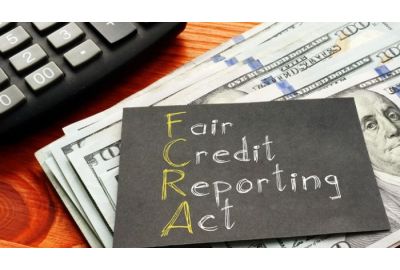
On October 24, the Consumer Financial Protection Bureau (CFPB) released information on workplace tracking technology under the Fair Credit Reporting Act (FCRA). Such technology could include the use of artificial intelligence (AI). Markedly, the CFPB has the primary regulatory and interpretive role regarding the FCRA. The agency also shares the enforcement role with the Federal Trade Commission (FTC). Overall, according to Littler, the circular explains if employers must comply with the FCRA’s employment-related provisions before using such technology. Earlier, the CFPB joined other federal departments and agencies by releasing artificial intelligence (AI) guidance. Specifically, the guidance calls for “fairness, equality, justice[,] and compliance as automated systems [like AI] become more commonly used.”
Company to Pay $3.1 Million in EEOC Sex Discrimination Lawsuit
On October 21, the Equal Employment Opportunity Commission (EEOC) announced that an Atlanta, Georgia-based company will pay $3.1 million to settle a sex discrimination lawsuit. The company is a leading provider of solid waste removal, recycling pickup, and landfill operation services. Notably, the settlement amount and additional injunctive relief settle a pattern-or-practice sex discrimination lawsuit. Employers must not discriminate against federally protected classes, which include race, sex, age, disability, and pregnancy status. Comparatively, the EEOC has ramped up its enforcement efforts in recent years. In August 2024, the agency announced that a staffing support firm will pay $1.25 million to settle a disability-related discrimination case.
Labor Department to Crack Down on Seven Workplace Contract Provisions
On October 15, the Department of Labor’s (DOL’s) Solicitor of Labor released a Special Enforcement Report on workplace contract provisions. Specifically, U.S. Solicitor of Labor Seema Nanda’s report announced that the agency would target seven specific employment-related contract provisions. Chiefly, she believes these provisions are “coercive” and could discourage workers from exercising their rights under federal workplace laws. Earlier this month, the DOL launched a new tool to assist employers in creating reasonable accommodations.
FY 2024 Report: EEOC Filed Over 100 Unlawful Discrimination Lawsuits Against Employers
On October 9th, 2024, the Equal Employment Opportunity Commission (EEOC) announced that it filed 110 unlawful employment discrimination lawsuits. Specifically, those lawsuits were filed in fiscal year (FY) 2024 and placed an emphasis on emerging issues. The agency also filed these lawsuits to advance the employment rights of underserved and vulnerable workers. Earlier, in September 2024, the EEOC announced that a Florida-based company would pay $1.6 million to settle a racial harassment case. Additionally, that lawsuit also included charges of national origin harassment and retaliation.
DOL Launches Tool to Provide Employers with Ideas for Workplace Reasonable Accommodations
On September 30, the Department of Labor (DOL) announced a new tool to assist employers in creating reasonable accommodations. Overall, the resource provides more than 700 ideas for accommodations for workers with disabilities and their employers. Previously, in September, the agency released a framework on inclusive artificial intelligence hiring and recruitment requirements.
DOL Releases Framework on Inclusive AI Hiring and Recruitment Requirements
On September 24, the U.S. Department of Labor (DOL) announced the publication of new AI hiring and recruitment requirements. Specifically called “AI & Inclusive Hiring Framework,” this new tool was designed to support the inclusive use of artificial intelligence (AI) in employers’ hiring technology. Additionally, the DOL believes the new resource will increase benefits for disabled job seekers. It is important to note that employers must not discriminate against federally protected classes, which include race, sex, age, disability, and pregnancy status. This includes whether or not the employer utilizes AI hiring and recruitment. Comparatively, the EEOC has ramped up its enforcement efforts in recent years. Previously, in April 2024, the DOL joined other federal departments and agencies by releasing AI guidance. Chiefly, the DOL’s release called for “fairness, equality, justice[,] and compliance as automated systems [like AI] become more commonly used.”