This website and our authorized third-party service providers use cookies to achieve the purposes described in our Privacy Policy. If you would like to learn more or withdraw your consent to some or all cookies, please review our Privacy Policy. By selecting “I ACCEPT” on this banner, scrolling this page, clicking any link, or continuing to browse this site, you agree to the use of cookies.
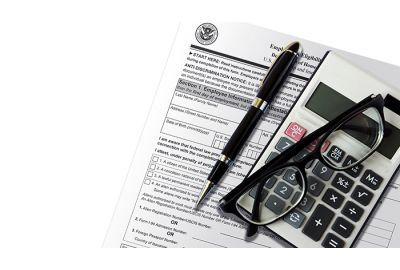
The National Labor Relations Board (NLRB) recently upheld an Administrative Law Judge’s (ALJ) finding on mandatory bargaining and I-9 compliance. The May NLRB ruling found that an employer wrongly refused to bargain over requiring employees to submit new I-9 forms. The employer also violated the National Labor Relations Act (NLRA) by not discussing the effects of submitting new I-9s. The ruling follows the NLRB Acting General Council’s announcement proclaiming that the NLRB will more thoroughly enforce the NLRA.
Background of the Case
Generally, in 2018 and 2019, the employer performed a Form I-9 audit and discovered rampant non-compliance. In order to fix the issues, the employer would need to request new I-9 forms from 95% of its workers. Specifically, the affected workers included any hired after November 6th, 1986, and before March 31st, 2018. As such, in July 2019, the employer notified affected employees that they need to complete new I-9 forms. Consequently, the employees’ union complained that it did not receive notice of the I-9 demand and wanted to bargain. In short, the employer responded that union bargaining did not apply to I-9 compliance efforts, and refused the request. Because of the employer’s lack of cooperation, the union filed an unfair labor practice charge.
The Outcome of the Case
Eventually, the ALJ found and the NLRB agreed that the employer’s requirement to submit new I-9 forms was flawed. Basically, the decisions stated that bargaining and I-9 compliance ARE connected as the Form I-9 requirement affects employment conditions. In short, I-9s affect employment terms and conditions, as employees who do not complete the I-9 risk losing their job. Explicitly, the employer argued that bargaining and I-9 compliance are NOT connected. In essence, that is because the Immigration Reform and Control Act of 1986 (IRCA) requires I-9 compliance. In summary, the ALJ and NLRB explained that the IRCA compliance was itself subject to mandatory bargaining. This is because the employer has discretion over how to comply with the IRCA.
Accordingly, the ALJ and the NLRB found the employer violated the NLRA. Markedly, the violation occurred when the employer refused to bargain with the union concerning how to complete the I-9 forms.
Employer Takeaways
In conclusion, the NLRB and ALJ decisions showcase just how blurry the line is between federal law and NLRA requirements. As such, employers must be cautious of how federal or state laws affect NLRA bargaining. Additionally, if an employer considers updating personnel files or processes, it should consider whether it implicates NLRA obligations.
Practical articles on HR, Safety, compliance, and people operations—written for real businesses, not legal textbooks.
U.S. Department of Labor Officially Restores Prior Overtime Exemption Rules
On May 14th, 2026, the Wage and Hour Division (WHD) of the U.S. Department of Labor (DOL) announced it has officially rescinded the 2024 overtime exemption rules. Specifically, the WHD published a technical amendment to restore previous 2019 regulations that dictated overtime exemptions for...
NLRB General Counsel Takes Action to Tackle Current Case Backlog
On May 6th, the National Labor Relations Board (NLRB) and NLRB General Counsel Crystal Stowe Carey announced the bulk transfer of thousands of labor practice cases. Specifically, this action fulfills an initiative signed by the NLRB General Counsel earlier this year. Overall, the initiative...
Privacy Agency Invites Comments from Businesses on the CCPA’s Usage of Personal Data
Recently, the California Privacy Protection Agency (CPPA) issued a call for comments on the current state of personal data collection under the California Consumer Privacy Act (CCPA). Specifically, the invitation to deliver remarks was issued on April 20th, 2026. The information provided by the...
DOL Proposes New Joint Employer Rule To Unify Standards Under Federal Labor Laws
In April 2026, the U.S. Department of Labor issued a proposed rule to establish a single, clear standard for determining when joint-employer status applies under three major federal laws: the Fair Labor Standards Act (FLSA), the Family and Medical Leave Act (FMLA), and the Migrant and Seasonal...
DOL Updates Enforcement Approach for Employee Benefit Plans: What Employers Should Know
The U.S. Department of Labor (DOL) recently announced a significant change in its enforcement of employee benefit plan rules. The DOL will now focus more closely on serious violations that harm workers and retirees, meaning compliant employers may face less scrutiny under the updated approach.