This website and our authorized third-party service providers use cookies to achieve the purposes described in our Privacy Policy. If you would like to learn more or withdraw your consent to some or all cookies, please review our Privacy Policy. By selecting “I ACCEPT” on this banner, scrolling this page, clicking any link, or continuing to browse this site, you agree to the use of cookies.
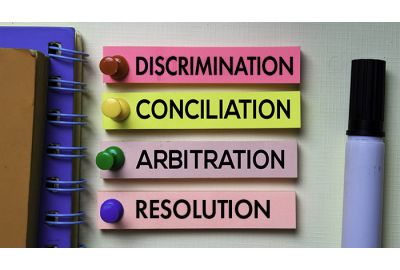
On June 24th, 2021, the U.S. House of Representatives (House) voted to overturn a Trump-era EEOC employment bias rule. Following the Congressional Review Act, the House’s vote comes after a May 19 vote from the U.S. Senate also overturning the rule. Specifically, the Trump administration imposed new procedures on the Equal Employment Opportunity Commission’s (EEOC’s) duty to settle employment discrimination claims. Basically, the EEOC would settle these claims through a conciliation process. Subsequently, after the House and Senate overturn votes, President Biden will receive the bill to sign into law. Earlier, in March 2021, the EEOC released its enforcement data for Fiscal Year 2020.
Background of Trump Administration Rule
Overall, in late 2020, the Trump Administration changed how government agencies enforced workplace anti-bias laws. For instance, the rule restricted the U.S. Department of Labor from referring worker complaints directly to the EEOC. Also, the Justice Department received heightened oversight over any workplace bias complaints received. That is to say that the EEOC could not contradict the Justice Department in any related bias litigation.
Title VII and Conciliation
Title VII of the Civil Rights Act of 1964 requires the EEOC to attempt and conciliate (settle) discrimination charges. Specifically, these charges are those that the agency believes have merit before considering moving toward litigation. Undeniably, a Supreme Court decision (Mach Mining, LLC v. EEOC) clarified how the EEOC satisfies conciliation requirements. Markedly, the decision held that courts have authority to review whether the EEOC has fulfilled its duty to attempt conciliation. Since 2015, the EEOC has consistently followed those standards. Following Congress’s decision to overturn the EEOC employment bias rule, the Mach Mining ruling again dictates the EEOC’s conciliation process.
EEOC Conciliation Efforts
In conclusion, the EEOC obtains relief through conciliation for thousands of working people each year. Furthermore, the EEOC has recently conciliated a more significant percentage of cases. For example, in Fiscal Year 2010, the EEOC achieved 27% successful conciliations. In Fiscal Year 2020, successful conciliations rose to nearly 44%. Additionally, in Fiscal Year 2020 alone, and before adopting the EEOC employment bias rule, $38.8 million was recovered for victims of discrimination through conciliation.
Practical articles on HR, Safety, compliance, and people operations—written for real businesses, not legal textbooks.
U.S. Department of Labor Officially Restores Prior Overtime Exemption Rules
On May 14th, 2026, the Wage and Hour Division (WHD) of the U.S. Department of Labor (DOL) announced it has officially rescinded the 2024 overtime exemption rules. Specifically, the WHD published a technical amendment to restore previous 2019 regulations that dictated overtime exemptions for...
NLRB General Counsel Takes Action to Tackle Current Case Backlog
On May 6th, the National Labor Relations Board (NLRB) and NLRB General Counsel Crystal Stowe Carey announced the bulk transfer of thousands of labor practice cases. Specifically, this action fulfills an initiative signed by the NLRB General Counsel earlier this year. Overall, the initiative...
Privacy Agency Invites Comments from Businesses on the CCPA’s Usage of Personal Data
Recently, the California Privacy Protection Agency (CPPA) issued a call for comments on the current state of personal data collection under the California Consumer Privacy Act (CCPA). Specifically, the invitation to deliver remarks was issued on April 20th, 2026. The information provided by the...
DOL Proposes New Joint Employer Rule To Unify Standards Under Federal Labor Laws
In April 2026, the U.S. Department of Labor issued a proposed rule to establish a single, clear standard for determining when joint-employer status applies under three major federal laws: the Fair Labor Standards Act (FLSA), the Family and Medical Leave Act (FMLA), and the Migrant and Seasonal...
DOL Updates Enforcement Approach for Employee Benefit Plans: What Employers Should Know
The U.S. Department of Labor (DOL) recently announced a significant change in its enforcement of employee benefit plan rules. The DOL will now focus more closely on serious violations that harm workers and retirees, meaning compliant employers may face less scrutiny under the updated approach.